
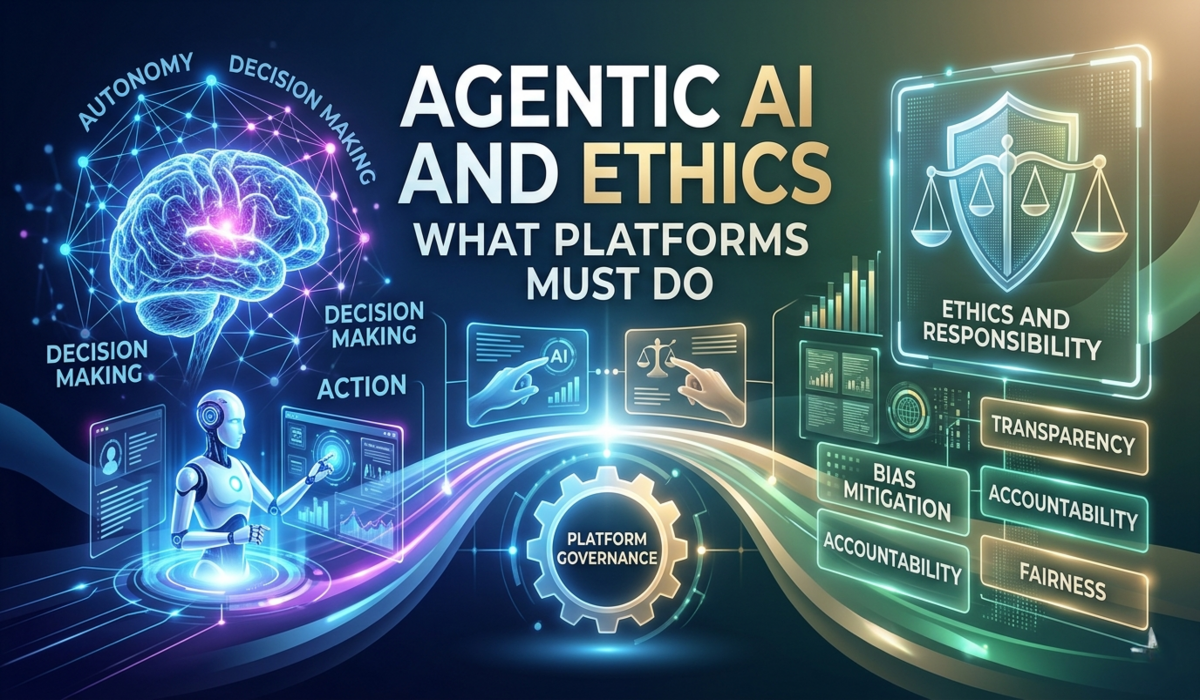
Explore Agentic AI and Ethics: What Platforms Must Do. Discover how Agentic AI is reshaping technology and why ethics matter. Learn what platforms must do to ensure responsibility, trust, and fairness in the AI era.
Table of Contents
Introduction
Artificial Intelligence is no longer limited to simple automation—it is entering a new era of autonomy.
One of the most transformative developments in this space is Agentic AI, a form of AI that can make decisions, set goals, and take actions independently within defined boundaries. Unlike traditional systems, agentic AI doesn’t just respond—it acts.
As powerful AI systems emerge from organizations like OpenAI and Google DeepMind, the conversation around Agentic AI and Ethics: What Platforms Must Do has become more critical than ever in 2026.
While this technology unlocks massive opportunities—from automation to intelligent decision-making—it also raises serious ethical concerns. Questions around accountability, bias, transparency, and control are no longer theoretical—they are real and urgent.
Who is responsible when an AI system makes a decision?
How do we ensure these systems act in alignment with human values?
And what safeguards must platforms implement to prevent misuse?
Platforms that design, deploy, or integrate agentic AI systems carry a significant responsibility. They must go beyond innovation and actively ensure that these intelligent agents operate safely, fairly, and ethically.
In this blog, we’ll explore what Agentic AI and Ethics truly means, why ethical frameworks are essential in this new AI era, and the key actions platforms must take to balance technological advancement with responsibility.
What is Agentic AI?
Agentic AI refers to systems capable of acting with some level of autonomy. These systems can analyze data, set sub-goals, and execute actions without waiting for constant human instructions. Think of them as AI “agents” that behave more like collaborators than mere tools.
Examples include:
- AI customer service bots that handle full conversations.
- Automated trading systems making split-second decisions in finance.
- Personal AI assistants that not only schedule tasks but suggest new ones proactively.
While these advancements are exciting, they raise new questions. Who is accountable if an AI agent makes a mistake? How do we prevent biases or harmful behaviors from spreading?
This is where Agentic AI and Ethics: What Platforms Must Do becomes the central question.
Why Ethics Matter in Agentic AI
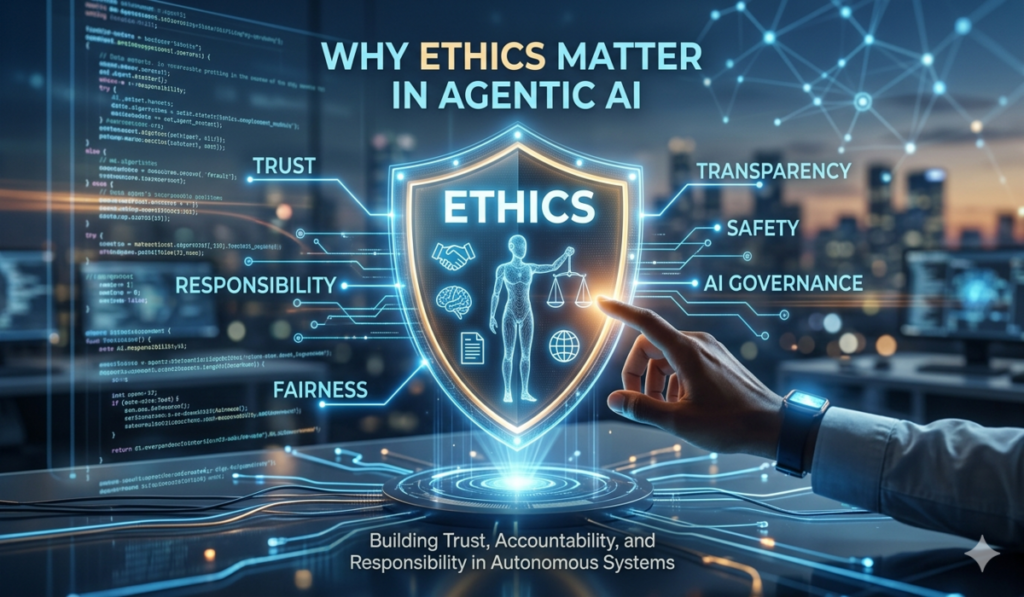
Ethics has always been a part of technology, but with AI, it becomes unavoidable. Agentic AI directly interacts with people’s lives, businesses, and social systems.
Some reasons why ethics are crucial:
- Bias and Fairness – AI agents trained on biased data can discriminate unintentionally.
- Privacy – Autonomous agents often require access to personal information. Mishandling this data can breach trust.
- Accountability – If an AI agent harms someone, who is responsible—the developer, the platform, or the AI itself?
- Transparency – Users should understand how and why AI makes certain decisions.
This makes it urgent to define clear guidelines for Agentic AI and Ethics: What Platforms Must Do in order to ensure fairness, safety, and trust.
Key Ethical Challenges in Agentic AI
1. Autonomy vs. Control
Giving AI freedom can improve efficiency, but lack of control risks harmful decisions.
2. Data Security
Since Agentic AI requires massive data, platforms must guard against leaks, theft, and misuse.
3. Human Dependency
Over-reliance on AI agents might reduce human judgment and creativity.
4. Misinformation
Autonomous AI could spread false or misleading information if not properly monitored.
5. Unemployment Concerns
As AI takes over certain tasks, ethical responsibility demands planning for displaced workers.
These challenges show why Agentic AI and Ethics: What Platforms Must Do is not just a topic for discussion—it’s a call for immediate action.
What Platforms Must Do: Practical Steps
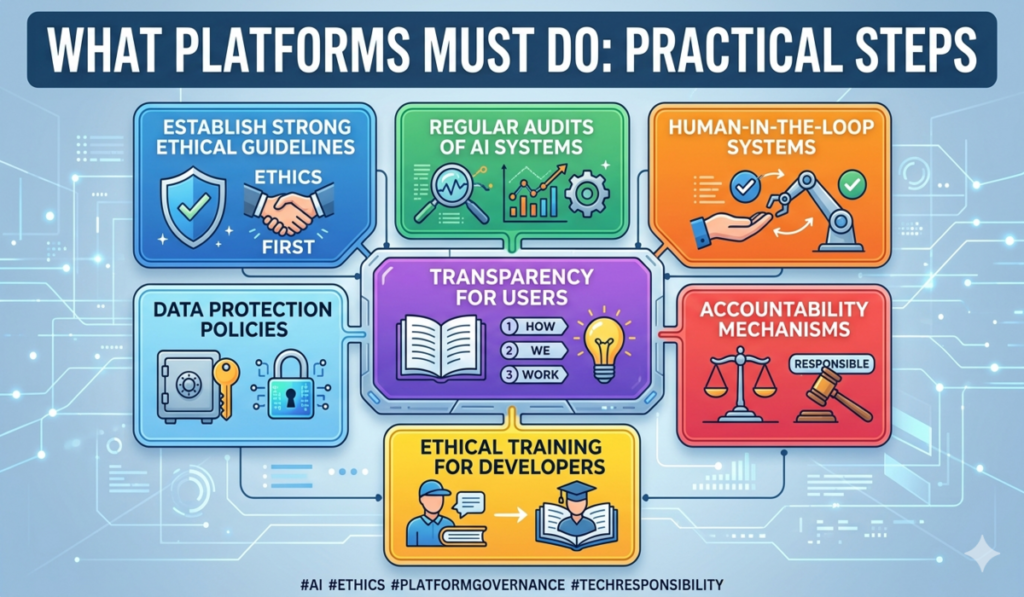
So, how can systems layout and manipulate Agentic AI responsibly? Let’s wreck it down:
1. Establish Strong Ethical Guidelines
Every platform should undertake a clean framework of ethical ideas. This ought to include equity, accountability, transparency, and recognize for privacy.
2. Regular Audits of AI Systems
Agentic AI should be tested regularly to ensure it behaves inside secure and ethical limitations. Independent audits upload credibility.
3. Human-in-the-Loop Systems
Platforms should layout AI so people can intrude when vital. Even the best agent have to not run completely with out oversight.
4. Data Protection Policies
Strict guidelines for dealing with personal statistics must be carried out. Encryption, anonymization, and consent-pushed utilization are important.
5. Transparency for Users
Users need to be informed while interacting with Agentic AI. Clear explanations of ways AI selections are made will build accept as true with.
6. Accountability Mechanisms
If something is going wrong, duty have to no longer fall into a gray vicinity. Platforms ought to outline who’s responsible.
7. Ethical Training for Developers
Engineers and designers must study in ethics, no longer simply coding. Building ethical attention ensures better AI layout.
By following these steps, structures can lead responsibly whilst addressing Agentic AI and Ethics: What Platforms Must Do in realistic methods.
Global Perspective on Agentic AI and Ethics
Countries and organizations worldwide are working on ethical frameworks:
- EU AI Act – Sets strict regulations on high-risk AI systems.
- UNESCO’s AI Ethics Recommendations – Emphasizes fairness and human rights.
- US AI Bill of Rights – Focuses on transparency and accountability.
Platforms must align their policies with these global efforts. The debate on Agentic AI and Ethics: What Platforms Must Do is not limited to one region—it’s a global concern.
Future of Agentic AI and Ethical Responsibility
Looking ahead, Agentic AI will only become more powerful. Platforms that ignore ethics risk legal challenges, user distrust, and reputational damage.
On the other hand, platforms that prioritize ethics will earn long-term trust and loyalty. Responsible innovation can unlock AI’s full potential without harming individuals or societies.
The real question is not whether AI can be agentic, but whether platforms will ensure Agentic AI and Ethics: What Platforms Must Do becomes a global standard.
Conclusion
Agentic AI has the power to transform industries, improve lives, and create new possibilities. But with power comes responsibility. Platforms are at the center of this ethical challenge.
From building transparent systems to ensuring accountability, platforms must step up and lead with integrity. The future of Agentic AI depends not just on how smart the technology becomes, but on how wisely we choose to guide it.
In short, the balance between innovation and ethics defines the true success of Agentic AI.
FAQs on Agentic AI and Ethics: What Platforms Must Do
1. What is Agentic AI?
Agentic AI refers to AI systems that can make decisions, set goals, and take actions independently within defined rules or environments, without constant human input.
2. Why are ethics important in Agentic AI?
Ethics are crucial because agentic AI systems operate autonomously. Without proper safeguards, they can make decisions that may lead to bias, harm, or unintended consequences.
3. What are the main ethical concerns in Agentic AI?
Key concerns include:
- Lack of accountability
- Bias and fairness issues
- Transparency and explainability
- Data privacy risks
- Potential misuse or harmful actions
4. What responsibilities do platforms have in Agentic AI?
Platforms must ensure that AI systems are safe, transparent, unbiased, and aligned with human values. They should implement strict governance, monitoring, and ethical guidelines.
5. How can companies ensure ethical use of Agentic AI?
Companies can:
- Establish ethical AI policies
- Conduct regular audits
- Use human oversight
- Ensure transparency in decision-making
- Follow global AI regulations and standards
6. Is Agentic AI regulated in 2026?
Yes, governments and organizations worldwide are working on AI regulations to ensure safe and ethical use of advanced AI systems, including agentic AI.
7. What is the future of Agentic AI and ethics?
The future will focus on building responsible AI systems with stronger governance, better transparency, and global ethical standards to ensure AI benefits society without causing harm.
4 thoughts on “Agentic AI and Ethics: What Platforms Must Do to Ensure Responsible AI in 2026”