
Discover how Voice SEO for Smart TVs and IoT Devices is transforming digital marketing in 2026. Learn how to optimize your brand for AI-powered, voice-driven searches.
Table of Contents
Introduction: The New Era of Voice Search
The future of search is becoming more conversational, connected, and device-driven.
In 2026, users are no longer relying only on smartphones and laptops to search online. Instead, they are interacting with:
- Smart TVs
- Smart speakers
- Wearable devices
- Home assistants
- Connected IoT ecosystems
using simple voice commands.
This evolution has made Voice SEO for Smart TVs and IoT Devices 2026 one of the most important digital marketing strategies for modern businesses.
Today, users say things like:
- “Play the best action movies on my TV.”
- “Find nearby restaurants open now.”
- “Recommend fitness videos for beginners.”
- “Order groceries through my smart speaker.”
Voice assistants such as Amazon Alexa, Google Assistant, and Siri are now deeply integrated into Smart TVs and Internet of Things (IoT) devices.
This shift means traditional text-based SEO alone is no longer enough.
In 2026, businesses must optimize for:
- Conversational voice queries
- AI-powered search behavior
- Multi-device search experiences
- Smart home ecosystems
- Real-time contextual search
- Voice-first user intent
AI-powered platforms like Google Gemini and ChatGPT are helping search engines understand natural language, context, and user preferences more accurately than ever before.
Voice SEO for Smart TVs and IoT devices helps businesses:
- Increase brand visibility
- Improve local search presence
- Enhance voice commerce opportunities
- Reach users across connected devices
- Deliver faster AI-driven experiences
- Improve customer engagement and conversions
To succeed in this voice-first ecosystem, businesses need:
- Conversational content
- Voice-friendly keywords
- Structured data and schema markup
- Fast-loading websites
- AI-readable answers
- Smart device optimization
As billions of connected devices continue shaping the future of digital interactions, businesses that optimize for voice-driven IoT ecosystems will gain a major advantage in search visibility and customer engagement.
In this blog, we’ll explore how Voice SEO for Smart TVs and IoT Devices works in 2026, why it matters for modern digital marketing, and the best strategies to optimize your content for the future of AI-powered connected search experiences.
What Is Voice SEO for Smart TVs and IoT Devices?
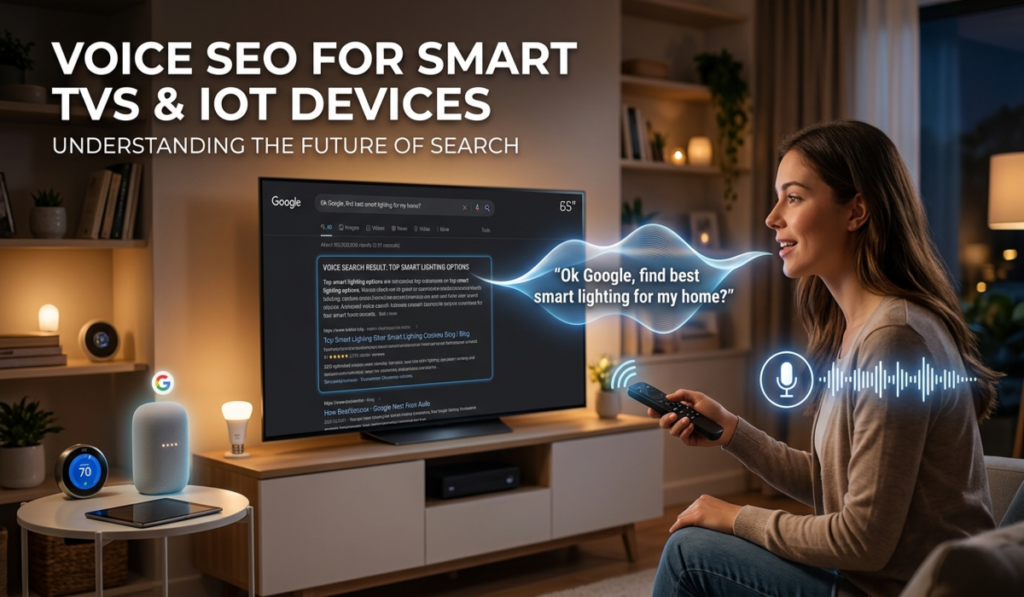
Voice SEO for Smart TVs and IoT Devices means optimizing your website, movies, and apps so that they can be effortlessly observed thru voice instructions made on linked devices.
Imagine a person announcing,
“Hey Google, show me the best pizza locations nearby,”
or
“Alexa, play health motion pictures on YouTube.”
These voice instructions trigger serps to discover the most applicable consequences — and if your content isn’t optimized for voice, you’re lacking out on a major target market.
How Voice SEO Differs from Traditional SEO
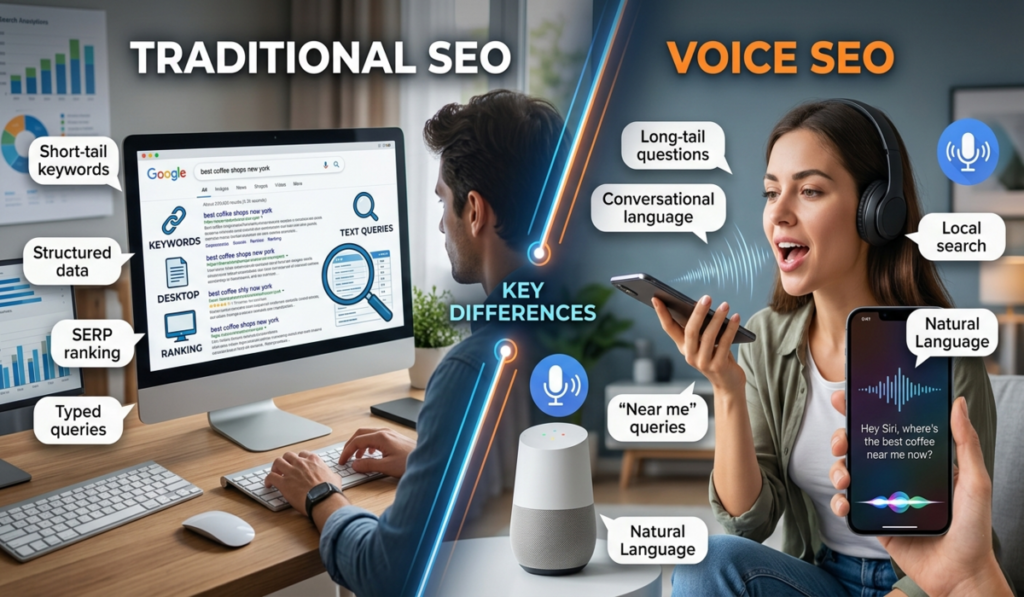
Traditional search engine marketing focuses on typed key phrases, while Voice SEO for Smart TVs and IoT Devices specializes in herbal language and communique-style terms. For example:
- Traditional SEO: “quality smart TVs 2026”
- Voice SEO: “Which smart TV is great to shop for in 2026?”
Voice queries are longer and extra human-like. They often encompass who, what, in which, why, and how — making content optimization more focused on reason rather than just key phrases.
Why Voice SEO for Smart TVs and IoT Devices Matters
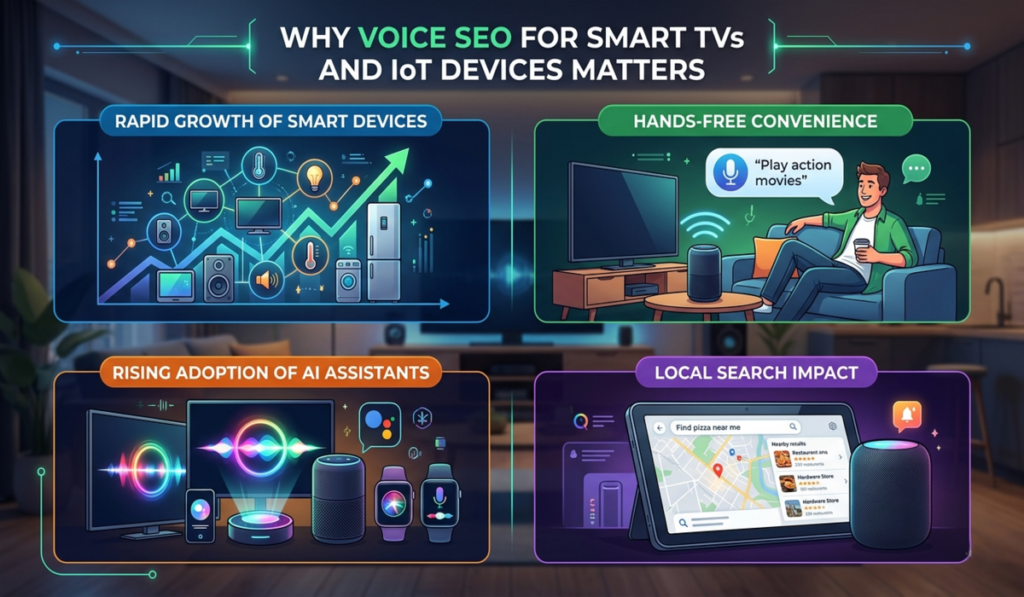
1. Rapid Growth of Smart Devices
There are over 25 billion IoT gadgets global, and lots of aid voice search. Smart TVs, smart speakers, and even smart refrigerators at the moment are part of each day lifestyles.
2. Hands-Free Convenience
Users prefer voice commands due to the fact they’re quicker and easier, particularly whilst multitasking or looking TV.
3. Rising Adoption of AI Assistants
Google Assistant, Alexa, Siri, and Samsung’s Bixby are included into nearly every clever tool, which means your content must be available to them.
4. Local Search Impact
Many voice searches are region-based, like “Find a close-by eating place.” This makes neighborhood search engine marketing extra important than ever.
Key Components of Voice SEO for Smart TVs and IoT Devices
1. Focus on Conversational Keywords
People communicate differently than they type. Use herbal, query-primarily based phrases in your content.
Example: Instead of “voice search engine optimization recommendations,” use “how to optimize for voice search engine marketing on clever devices.”
Include conversational lengthy-tail key phrases that mimic actual questions users ask their gadgets.
2. Optimize for Featured Snippets
Smart gadgets frequently examine out the featured snippet (function 0) from Google.
To seem right here:
- Provide clear, concise solutions.
- Use bullet points and numbered lists.
- Add a FAQ section in your posts.
This shape makes it simpler for AI assistants to study your content material aloud.
3. Improve Page Load Speed
Speed matters even greater for Voice SEO for Smart TVs and IoT Devices.
Smart devices select short-loading sites due to the fact voice customers expect instant answers.
- Compress photos.
- Use CDN and caching.
- Optimize your web page’s code for overall performance.
4. Implement Schema Markup
Schema markup facilitates search engines recognize your content better.
For voice search, use schema sorts like:
- FAQPage
- HowTo
- LocalBusiness
This allows devices accurately supply your content material thru voice responses.
5. Local SEO Optimization
Many IoT and Smart TV voice searches are nearby, inclusive of “Find nearby restore offerings.”
To optimize:
- Add your commercial enterprise to Google Business Profile.
- Include location keywords certainly.
- Ensure NAP (Name, Address, Phone) consistency across systems.
6. Create Device-Friendly Content
Smart TVs and IoT devices have specific show interfaces.
For Smart TVs:
Optimize video titles and descriptions for voice popularity.
Use brief, catchy commands in metadata.
For IoT gadgets:
Focus on quick-form solutions and dependent statistics due to the fact many IoT devices show minimal information.
7. Focus on User Intent
Understanding intent is the heart of Voice SEO for Smart TVs and IoT Devices.
There are 3 fundamental forms of voice searches:
- Informational: “How does a clever TV paintings?”
- Navigational: “Open Netflix on Samsung TV.”
- Transactional: “Buy a brand new smart speaker on-line.”
Tailor your content material for all 3 by way of supplying cost-based totally, natural answers.
8. Optimize Multimedia Content
Since Smart TVs depend heavily on video content material:
- Add AI-powered subtitles.
- Include keyword-wealthy video descriptions.
- Add timestamps for key moments.
This makes your films simpler to find via voice commands like,
“Play the video approximately voice SEO guidelines on YouTube.”
9. Mobile Optimization Still Matters
Many voice searches begin on mobile and preserve on smart devices.
Ensure your website:
- Is cellular-responsive.
- Uses easy navigation.
- Loads fast on all gadgets.
10. Embrace AI Tools
Leverage AI-based totally tools like:
- Google Bard or ChatGPT for key-word thoughts.
- MarketMuse for content material optimization.
- Surfer SEO for enhancing clarity and relevance.
These gear assist you align with how AI-powered devices procedure and apprehend information.
Challenges in Voice SEO for Smart TVs and IoT Devices
Limited Display:
Many IoT gadgets don’t have displays, so your content material need to be easily examine aloud by AI assistants.
Different Ecosystems:
Optimizing for Alexa isn’t the same as for Google Assistant or Siri.
Privacy Concerns:
Smart gadgets continuously listen for voice commands, elevating protection issues that could have an effect on person adoption.
Evolving Algorithms:
Voice algorithms evolve quicker than traditional ones, so techniques need frequent updates.
Future of Voice SEO for Smart TVs and IoT Devices
By 2026, over 70% of households are expected to personal as a minimum one voice-enabled device.
AI will become extra predictive — looking ahead to consumer wishes even earlier than they communicate.
For example:
- Smart TVs can also advocate content material primarily based for your previous commands.
- IoT domestic structures may order groceries automatically while resources run low.
This means Voice SEO for Smart TVs and IoT Devices will awareness on personalization and AI-driven conduct prediction.
Tips to Get Started with Voice SEO Today
- Research query-based totally key phrases.
- Write content material with natural verbal exchange flow.
- Add a FAQ section for voice snippets.
- Ensure your internet site is speedy and cellular-pleasant.
- Update content often based totally on voice trends.
Start small — optimize one page or video at a time and screen voice seek performance the use of gear like Google Search Console’s “Search Appearance” report.
Conclusion: Be Heard in the Smart World
As smart devices hold to dominate, Voice SEO for Smart TVs and IoT Devices might be the bridge between customers and your brand.
By adapting your strategy to voice-pushed seek, you may attain audiences where they spend the maximum time — on linked gadgets.
Don’t anticipate the destiny to reach — talk your emblem into it!
FAQs About Voice SEO for Smart TVs and IoT Devices
1. What is Voice SEO for Smart TVs and IoT Devices?
It is the process of optimizing content for voice searches performed through Smart TVs, smart speakers, and connected IoT devices.
2. Why is voice SEO important in 2026?
More users now search using voice assistants and connected devices instead of traditional text-based searches.
3. Which devices support voice search?
Devices include Smart TVs, smart speakers, wearables, connected home devices, and mobile assistants.
4. Which voice assistants dominate IoT search?
Popular assistants include Amazon Alexa, Google Assistant, and Siri.
5. How can businesses optimize for IoT voice search?
Businesses should:
- Use conversational keywords
- Add structured data
- Optimize mobile speed
- Create direct answers
- Focus on local SEO
6. Does voice SEO improve smart home visibility?
Yes. Voice optimization helps businesses appear in smart home and connected device search results.
7. What is the future of voice SEO and IoT search?
The future includes AI-powered personalization, predictive voice assistants, smart commerce, and seamless multi-device search experiences.
What’s Next
Voice Optimized Landing Pages SEO: The Future of Search in 2026
Voice SEO for Multimodal Search 2026: How AI Is Shaping the Future of Search
6 thoughts on “Voice SEO for Smart TVs and IoT Devices 2026: Boost Visibility in the Age of AI-Powered Search”