

Discover how Voice SEO for Multimodal Search transforms the way users search using voice, visuals, and text — making SEO smarter, faster, and more human.
Table of Contents
Introduction
The future of search is no longer limited to typing keywords into a search box.
In 2026, users search using a combination of:
- Voice commands
- Images
- Text queries
- Videos
- Gestures
- AI-powered assistants
This evolution is driving the rise of Voice SEO for Multimodal Search 2026, a revolutionary approach that combines voice search optimization with AI-powered multimodal search experiences.
Instead of relying on one type of input, modern search engines now understand multiple forms of communication simultaneously.
For example, users can now:
- Take a photo of shoes and ask, “Where can I buy these near me?”
- Use voice commands like, “Find healthy restaurants similar to this image.”
- Combine voice, visuals, and text to get more personalized search results
AI systems powered by Google Gemini, ChatGPT, and advanced search technologies are transforming how users discover information online.
Voice assistants like Google Assistant, Amazon Alexa, and Siri are becoming smarter by understanding context, visuals, and conversational intent together.
In 2026, multimodal search focuses on:
- Conversational search behavior
- AI-driven personalization
- Visual and voice integration
- Context-aware search experiences
- Real-time recommendations
- Cross-device interactions
This shift means businesses must optimize content not only for traditional SEO but also for:
- Voice-first search
- Visual search optimization
- AI-readable content
- Structured data and schema markup
- Conversational user intent
Voice SEO for multimodal search helps businesses:
- Improve search visibility
- Reach mobile and voice users
- Increase engagement
- Enhance user experience
- Rank in AI-powered search systems
As AI-powered multimodal search becomes the future of digital discovery, brands that adapt early will gain a major competitive advantage.
In this blog, we’ll explore how Voice SEO for Multimodal Search works in 2026, why it matters for modern SEO, and the best strategies businesses can use to optimize for the next generation of AI-powered search experiences.
What Is Voice SEO for Multimodal Search?
Let’s break it down honestly.
Voice search engine optimization means optimizing your content so it could be easily determined and ranked while humans use voice commands — like whilst you ask Alexa, Siri, or Google Assistant for answers.
Multimodal seek is going one step further. It way engines like google understand multiple types of input — voice, text, and pics — all together.
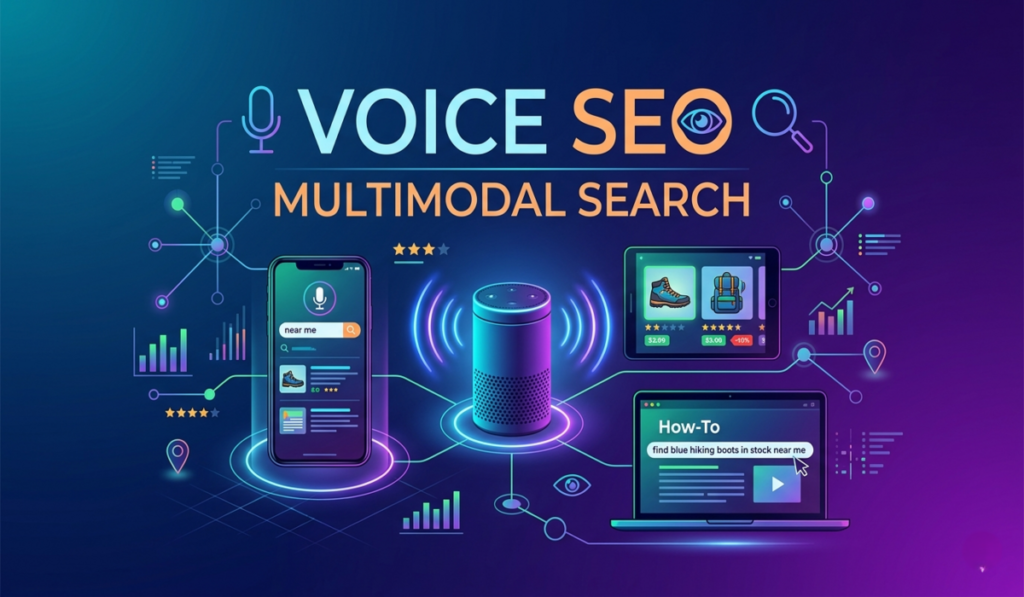
So, Voice SEO for Multimodal Search is ready making your internet site visible and applicable when users engage with search engines the usage of any combination of speech, text, or visuals.
Example: Imagine pronouncing,
“Hey Google, show me pink footwear like this,”
even as importing a photograph.
That’s multimodal seek in movement — and it’s becoming the future of ways we find out information on-line.
How Voice SEO Works in a Multimodal Search World
Voice search has modified how we communicate with generation. We don’t kind “pleasant restaurants Delhi” anymore — we are saying,
“What are the best restaurants close to me open right now?”
This conversational tone method your search engine optimization strategy should adapt.
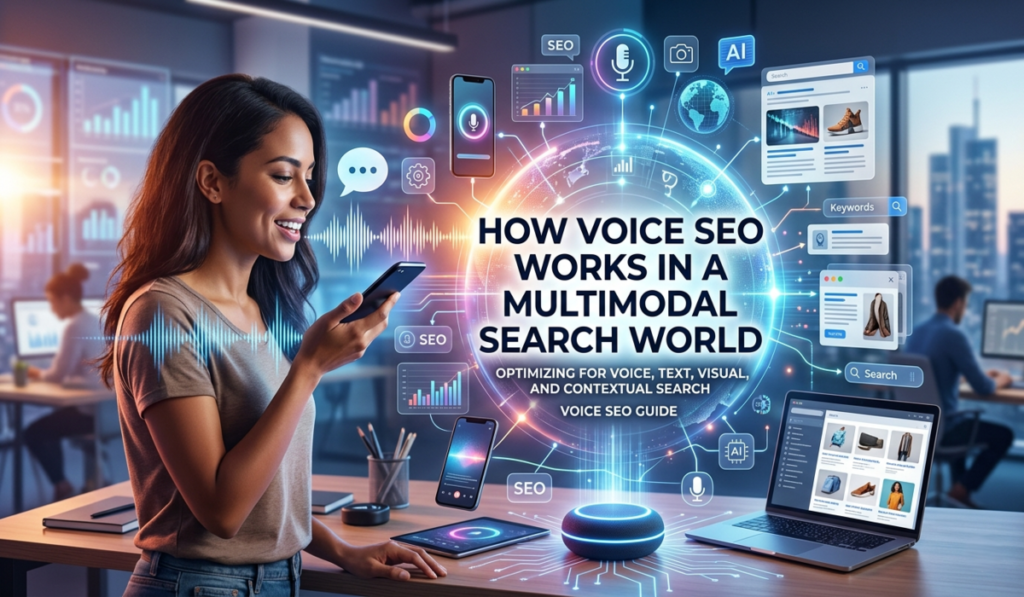
Voice SEO for Multimodal Search uses AI, natural language processing (NLP), and semantic understanding to interpret that means, context, and emotion in the back of voice queries.
For example, when users ask,
“How can I restore my damaged computer screen?”
AI determines whether they want a DIY video, a carrier middle, or a close-by store — all in real time.
Multimodal seek adds any other layer — it combines what you are saying with what you show (like uploading a image or scanning a barcode).
This powerful aggregate lets in Google and different engines like google to supply outcomes that aren’t just correct, but deeply customized.
Why Voice SEO for Multimodal Search Matters
The upward push of Voice SEO for Multimodal Search is not any coincidence — it’s the end result of ways customers clearly prefer to interact with generation.
Here’s why it subjects:
- Voice searches are growing: Over 60% of smartphone customers use voice assistants day by day.
- Visual search is booming: Platforms like Google Lens and Pinterest Lens take care of billions of photo-primarily based searches month-to-month.
- AI is smarter: Algorithms now join context, conduct, and tone to understand actual cause.
Together, those developments are shaping the foundation of Voice SEO for Multimodal Search, making it critical for every marketer, blogger, and enterprise owner.
The Components of Voice SEO for Multimodal Search
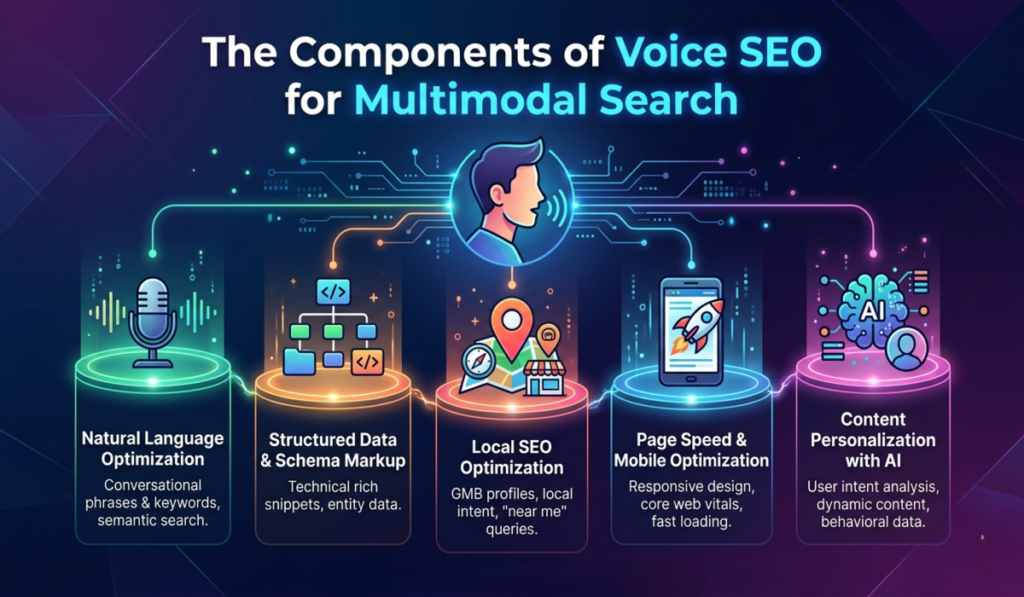
To achieve this new surroundings, we want to recognize its key additives:
1. Natural Language Optimization
People communicate in another way from how they kind. Voice seo focuses on conversational key phrases like:
“What’s the top notch mobile phone beneath ₹20,000?”
in place of
“high-quality telephones below 20000.”
Using herbal phrases and questions is vital for ranking in voice and multimodal searches
2. Structured Data and Schema Markup
Voice assistants depend heavily on established statistics to offer quick solutions. Adding schema markup enables search engines like google like google choose out relevant snippets for featured solutions.
3. Local SEO Optimization
Voice and multimodal searches frequently have community cause — “near me” or “nearby.”
Optimizing for neighborhood key phrases, Google My Business, and map listings is vital in Voice SEO for Multimodal Search.
4. Page Speed and Mobile Optimization
Voice searches take region totally on mobile.
A sluggish or unresponsive website can drop your ratings right away.
Make your website fast, cellular-nice, and voice-are searching for ready.
5. Content Personalization with AI
AI-driven analytics can apprehend individual behavior and purpose.
Creating personalised solutions, FAQs, and featured snippets boosts your visibility.
How Multimodal Search Enhances Voice SEO
Voice by myself can’t always describe the whole lot sincerely. That’s where multimodal search bridges the distance.
Imagine this situation:
You’re in a fixtures shop and want to suit your dwelling room shade. You say —
“Hey Google, find sofa covers like this,”
whilst displaying a image.
The AI identifies the color, fashion, and even nearby stores promoting comparable merchandise.
This seamless enjoy is what Voice SEO for Multimodal Search ambitions to deliver — a connected, smart, and convenient seek journey.
Benefits of Voice SEO for Multimodal Search
Let’s take a look at the biggest benefits for organizations and creators:
✅ Improved Visibility – Be located throughout voice, picture, and text searches.
✅ Higher Engagement – Multimodal content material keeps users interested longer.
✅ Better Conversions – Voice results regularly lead to faster selections.
✅ Enhanced User Experience – Conversational, natural, and visual consequences experience human.
✅ Future-Proof SEO – Stay in advance of evolving AI seek trends.
When optimized well, Voice SEO for Multimodal Search can significantly growth organic visitors and construct agree with with users.
Strategies to Master Voice SEO for Multimodal Search
Here are some practical tips to future-proof your SEO strategy:
- Use Long-Tail Conversational Keywords:
Focus on how real people speak, not just type.
Example: “Which laptop is best for students?” - Optimize for Featured Snippets:
Try answering common questions directly in your blog. - Create FAQ Sections:
FAQs mirror the question-based style of voice queries. - Focus on Local SEO:
Include city names, landmarks, and local intent keywords. - Leverage AI Tools:
Tools like ChatGPT, Jasper, and SurferSEO can help identify conversational patterns and intent. - Integrate Visual Search Elements:
Use descriptive image titles, alt text, and structured data.
These small tweaks make a big difference in your Voice SEO for Multimodal Search strategy.
The Role of AI and Machine Learning
AI is the heart of multimodal seek. It helps voice assistants recognize tone, emotion, and relevance.
Machine studying models are trained to analyze:
- Voice tone
- Image context
- Previous interactions
- Search history
This allows systems like Google Multisearch AI to merge voice and imaginative and prescient seamlessly.
With Voice SEO for Multimodal Search , groups could be able to are expecting what customers want — even before they completely say it.
Future of Search: Multimodal Voice = Smart Discovery
By 2026, search gained’t be restricted to typing or speaking.
We’ll be displaying, talking, and gesturing to devices that understand context immediately.
Voice SEO for Multimodal Search is the roadmap to this future — wherein search is no longer only a query, but a conversation.
It’s time to forestall optimizing for machines and begin optimizing with them.
Final Thoughts
The search engine optimization world is evolving into an intelligent, multimodal surroundings wherein voice, visuals, and AI blend collectively.
Voice SEO for Multimodal Search is not just a trend — it’s the foundation of the way people will seek inside the years to come.
If your content speaks evidently, masses quickly, and consists of dependent data, you’ll already be beforehand of ninety% of your competition.
The key to fulfillment in 2026?
Be conversational. Be visual. Be human.
For greater AI-powered SEO insights and future tendencies, visit 👉 AiproInsight.Com
FAQs: Voice SEO for Multimodal Search
1. What is multimodal search?
Multimodal search allows users to search using multiple inputs like voice, text, images, and videos simultaneously.
2. What is Voice SEO for multimodal search?
It is the process of optimizing content for voice-driven and AI-powered multimodal search experiences.
3. Why is multimodal search important in 2026?
Users increasingly rely on voice assistants, image search, and AI-powered tools for faster and smarter search experiences.
4. Which AI platforms support multimodal search?
Platforms like Google Gemini and ChatGPT support multimodal AI interactions.
5. How can businesses optimize for multimodal search?
Businesses should:
- Optimize images and videos
- Use conversational keywords
- Add structured data
- Improve mobile performance
- Create AI-friendly content
6. How does voice search connect with multimodal SEO?
Voice search enhances multimodal experiences by allowing users to interact naturally through spoken language and AI assistants.
7. What is the future of multimodal search SEO?
The future includes AI-driven search personalization, visual voice commerce, predictive search, and fully conversational digital experiences.

Suraj Verma is the Founder of AiProInsight and an AI Automation Researcher specializing in Artificial Intelligence, AI Automation, n8n, SEO, and Digital Marketing. He has published 300+ practical articles covering AI tools, automation workflows, and productivity solutions.
5 thoughts on “Voice SEO for Multimodal Search 2026: How AI Is Transforming the Future of Search”